


A meme coin is a cryptocurrency born from an internet joke, a viral image or a community mascot rather than a technical whitepaper. Bitcoin was designed as peer-to-peer digital cash and Ethereum powers decentralized apps; meme coins exist because they’re funny, relatable or culturally on-point at exactly the right moment. That sounds unserious, and some of it is, yet a handful of these joke tokens have grown into multi-billion-dollar assets with communities more loyal than most tech companies could dream of. Here’s how the whole thing actually works, told straight, from your frens at Bill The Bear.
Quick honesty checkpoint before anything else: this guide is educational, not financial advice. Meme coins are among the most speculative assets on earth, and total loss is a normal outcome, not a rare one.
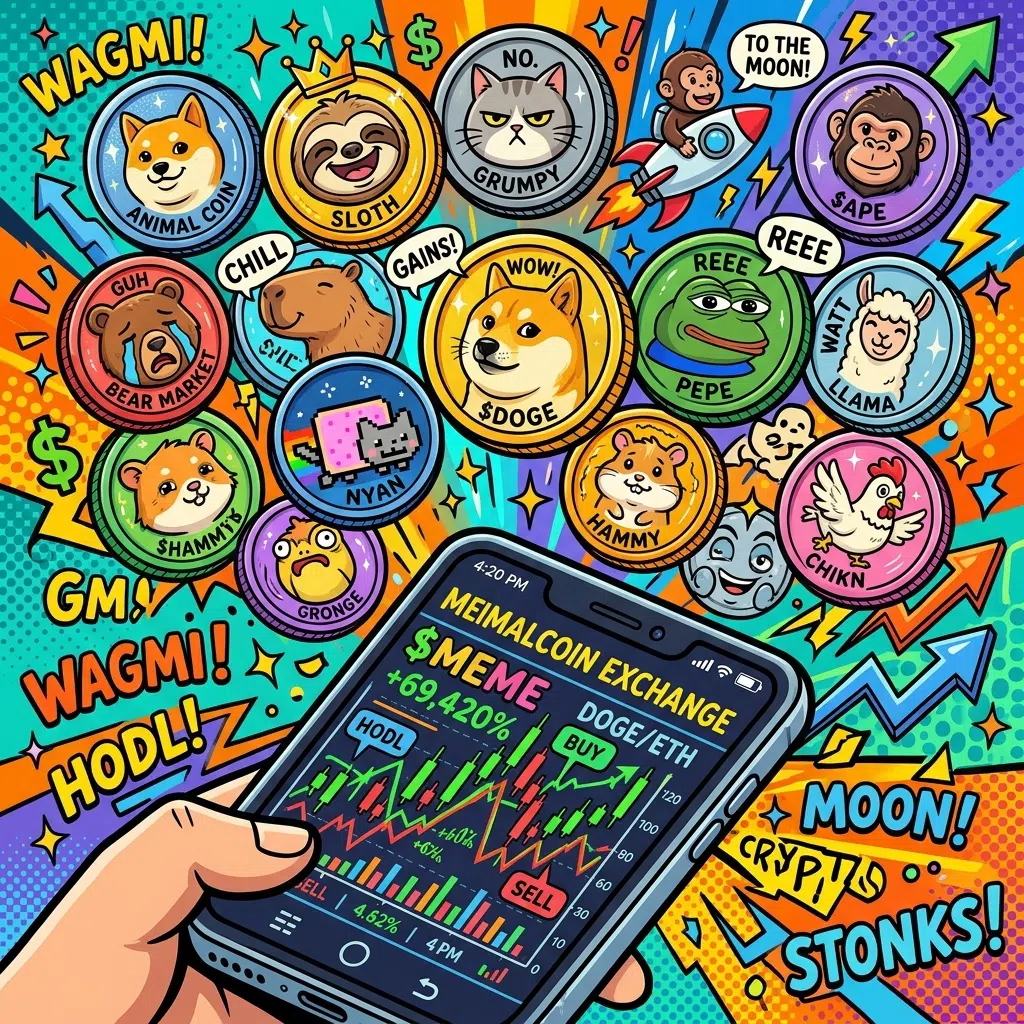
How do meme coins work?
Technically, a meme coin works like any other cryptocurrency: it’s a token recorded on a blockchain, a public ledger that tracks who owns what without a bank in the middle. You hold it in a wallet, send it to anyone, and trade it on exchanges. Dogecoin runs on its own proof-of-work chain similar to Bitcoin’s, Shiba Inu lives on Ethereum, and the modern generation, tokens like BONK, WIF and $Bill, runs on Solana, whose near-zero fees and instant transactions are exactly why meme culture moved there.
The difference is what’s underneath. A utility token’s value argument is “this technology does something.” A meme coin’s value argument is “this community believes in something, and the belief is growing.” No revenue, no product roadmap in the traditional sense. Attention is the fundamental, and the price chart is a real-time graph of collective enthusiasm.
Where the value actually comes from
Strip away the noise and meme coin prices move on four forces.
- Community. When people say a token is community-driven, they mean its success depends on holders showing up: making memes, raiding X, welcoming newcomers in Telegram, holding through dips. A meme coin with a dead community is just a picture with a ticker.
- Virality. These tokens are engineered to spread. A meme that lands can 10x attention overnight, and attention converts to buyers. The reverse is also true, and faster.
- Scarcity math. Most meme coins mint enormous supplies, billions or trillions of tokens, which makes the per-unit price tiny. A coin at $0.0001 feels “cheap” compared to Bitcoin, but what matters is market cap: price times total supply. A trillion-token coin at a fraction of a cent can already be a billion-dollar asset.
- Narrative and moments. Listings on major exchanges, celebrity mentions, and cultural moments produce the vertical candles memes are famous for, in both directions.
A very short history: from one dog to a million tokens
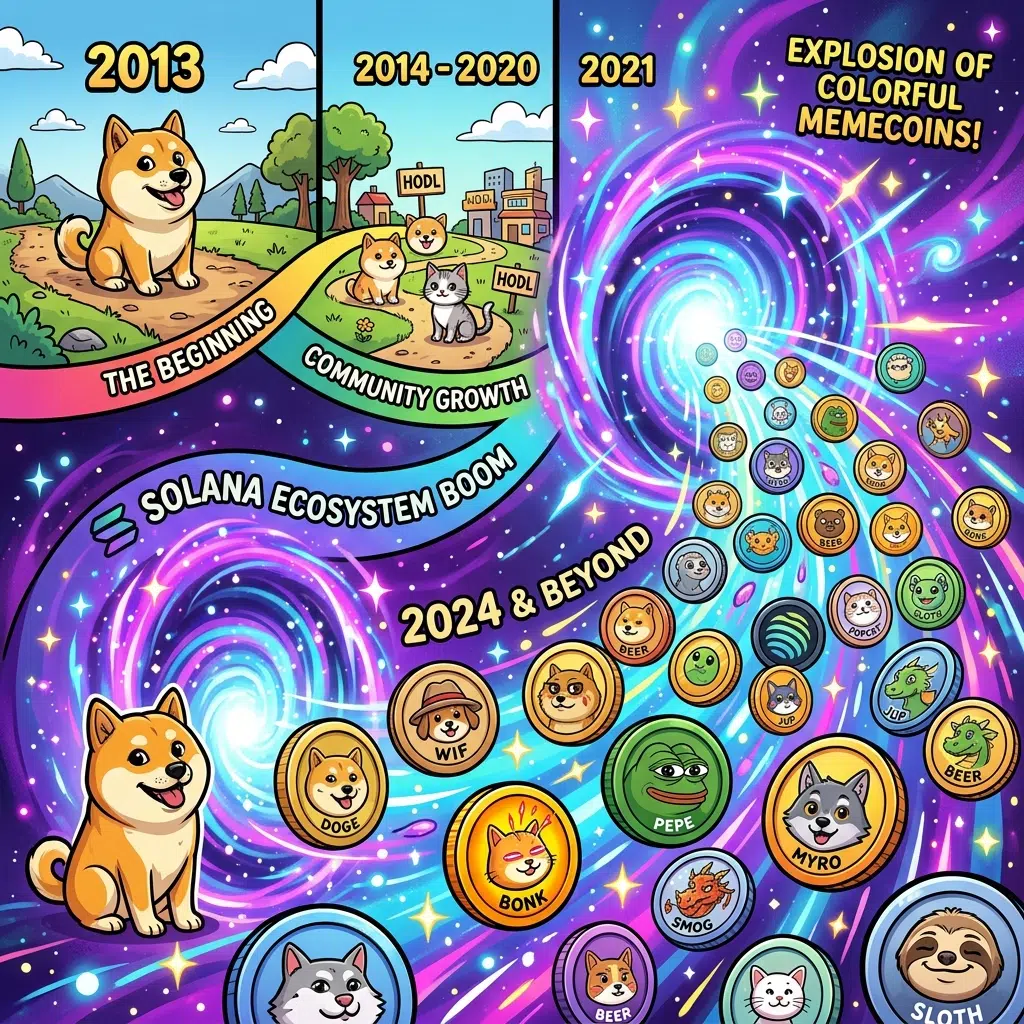
Dogecoin started it all in 2013, created in a few hours as a parody of crypto seriousness, wearing a Shiba Inu from a popular meme. The joke outlived the punchline: DOGE built one of crypto’s friendliest communities and eventually a market cap in the tens of billions at its peaks. Shiba Inu followed in 2020 as the self-declared Dogecoin killer and proved a meme coin could bootstrap an entire ecosystem on Ethereum.
Then Solana changed the economics. With transactions costing fractions of a cent and launch tools letting anyone deploy a token in minutes, thousands of new meme coins now launch every single day. Breakouts like BONK and dogwifhat minted the new generation of Solana meme culture, and characters with actual lore, an origin story, a personality, a world, became the way serious communities distinguish themselves from the daily flood. A bear raised by ducks, to pick a completely random example, is lore.
How meme coins get made (and why there are so many)
Creating a token used to require a developer. On Solana it now requires a picture, a name and a few clicks. Launch platforms let anyone deploy a token in minutes for a few dollars, typically using a bonding curve: an automated pricing mechanism where the token starts near zero and the price climbs as people buy in, until the token “graduates” to a real DEX listing with its own liquidity pool. The whole lifecycle, idea to tradeable token, can take an afternoon.
This is why thousands launch daily and why almost all of them die: when creation is free, creation stops being a signal. The tokens that survive are the ones that were never really about the deploy button, projects with a character people love, a community that shows up daily, and a team that keeps building the world around the token after launch day. The technology filters nothing anymore; the culture does all the filtering now.
The risks, without the sugar
Everything that makes meme coins exciting makes them dangerous, and a guide that skips this part is selling you something.
Volatility. Double-digit percentage moves in a day are routine, 90 percent drawdowns are common, and most of the thousands of tokens launched daily go to zero within weeks. Never put in money whose loss would change your life.
Rug pulls. Anonymous creators can launch a token, hype it, then drain the liquidity pool and vanish, leaving holders with tokens that can’t be sold. It’s the signature scam of the meme world.
Pump and dumps. Coordinated groups inflate a price with hype, sell into the buyers they attracted, and let the chart collapse. If you learned about a coin from a sudden wave of identical excitement, you may be the exit liquidity.
Fakes and honeypots. Scammers clone popular tokens with identical names and logos, or deploy contracts that let you buy but never sell. The only defense is verifying the exact contract address from a project’s official site, never from a search result or a DM.
How to tell a real community from a trap
A few checks separate the projects worth your attention from the daily sludge. Look at how tokens are distributed: if a handful of wallets hold most of the supply, they control your fate. Check whether liquidity is locked or burned, which removes the classic rug pull lever. Watch the community for a week: real ones make jokes, help newcomers and survive red days; fake ones post nothing but price predictions and “next 100x” spam. And read the tokenomics page: a project that publishes its supply, its distribution and its contract address openly, the way transparency-minded projects do, is showing you its homework. Zero taxes on trades, clear supply, public contract: those are the table stakes.
So… should you buy one?
That’s between you, your risk tolerance and your budget, and nobody on the internet, including a cartoon bear, should make that call for you. What we can say: people who do well in meme coins tend to treat them as entertainment with a cost, like a night out, rather than an investment plan; they size positions so a total loss stings but doesn’t wound; and they do the safety homework before the first dollar moves. If after all this honesty you still want in, at least do it the safe way: our step-by-step guide on how to buy Solana meme coins safely walks through the whole Phantom wallet process, scam traps included. And if you just want to hang out with the friendliest bear on the internet first, the Bill The Bear family is always taking new besties in Telegram, no purchase required for a bear hug.

FAQ
What is a meme coin in simple terms?
A cryptocurrency created around an internet joke, image or character rather than a technical purpose. It works on the same blockchain rails as any crypto, but its value comes from community and attention instead of utility.
Are meme coins the same as altcoins?
Meme coins are a subset of altcoins (everything that isn’t Bitcoin). Most altcoins pitch technology or utility; meme coins pitch culture and community, and their prices behave accordingly.
Why are meme coin prices so low per token?
Huge supplies, often billions or trillions of tokens, spread the market cap across many units. A tiny per-token price doesn’t mean a coin is cheap; market cap (price times supply) is the number that matters.
Can meme coins make you rich?
A small number of early holders of breakout coins have made life-changing gains, which is exactly why thousands of doomed imitations launch daily. Statistically, most meme coins lose most of their value. Treat any purchase as high-risk entertainment.
What’s the safest way to buy one?
Self-custody with a reputable wallet like Phantom, SOL for fees, a verified contract address from the project’s official site, and a swap on an established platform like Jupiter or Raydium. The full walkthrough is in our buying guide.